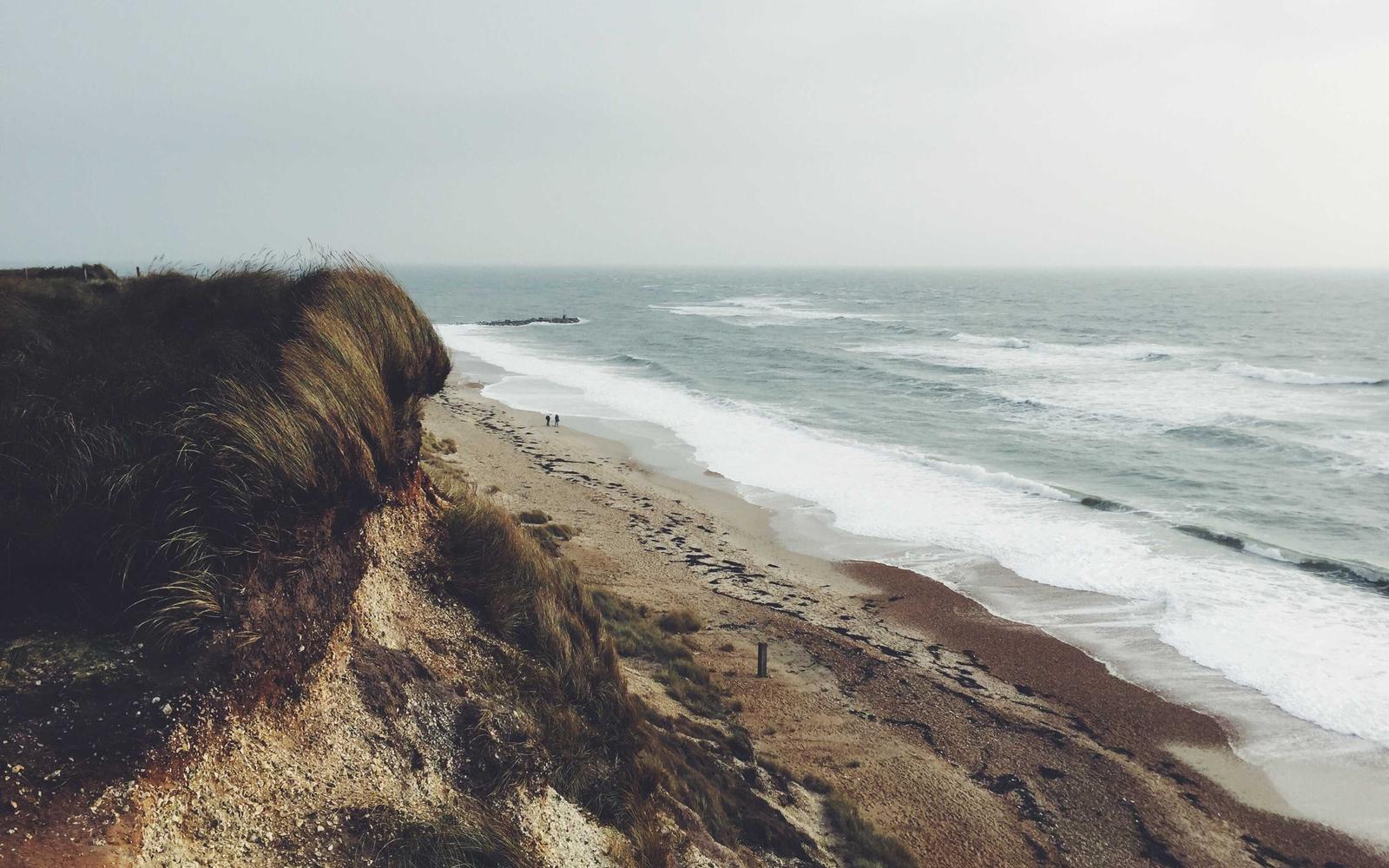
Loutro sits in a half-moon notch of the south Cretan coast, between the cliffs of the Sfakia and the Libyan Sea. There is no road to it. You arrive by ferry from Chora Sfakion, or you walk the goat path down from Anopoli, three hours if you do not stop.
On an April morning the village is still in shadow. The sun, when it comes, will arrive over the ridge to the east at about seven-twenty. Until then the harbor is the color of slate and the whitewashed houses are blue.
Manolis Papadakis was on his caique at four. He is fifty-eight, the youngest of the three remaining commercial fishermen in Loutro. The other two are his uncle, Yannis, who is seventy-four, and a man named Stavros, who is sixty-nine and will not say his last name.
"They write down everything now," Stavros said. "What I catch, what I sell, what I eat. I do not need to be in your notebook."
Manolis was more generous. He took me out on the caique, a wooden boat painted white with a blue waterline, named the Eleftheria, after his mother. We left the harbor at four-thirty and motored east along the cliffs.
The fishery here is small-scale and inshore. Manolis works longlines and gillnets, and in summer he sets fish traps in twenty meters of water along the rocky bottoms. He targets red mullet, picarel, scorpionfish, and the occasional dentex.
"My father caught grouper as long as my arm," he said. "I catch them as long as my hand. The sea is tired."
The Mediterranean is one of the most overfished bodies of water on earth. According to the General Fisheries Commission for the Mediterranean, more than seventy percent of assessed stocks are fished above sustainable levels. Manolis does not need a report to tell him this.
He pulled the first line at five-fifteen. The catch came up in fits and starts: a small scorpionfish, two picarel, a moray eel that he cursed at and threw back, and, near the end, a single red mullet the color of a sunset.
“The catch came up in fits and starts: a small scorpionfish, two picarel, a moray eel that he cursed at and threw back, and, near the end, a single red mullet the color of a sunset.”
"Enough for the taverna," he said. "Not enough for the market."
There is no market in Loutro. The catch goes to the four tavernas along the harbor, and what does not sell there goes back with the ferry to Chora Sfakion, where it is sold from a styrofoam cooler at the dock.
Manolis has two sons. The older, Nikos, works at a hotel in Chania. The younger, Petros, is at university in Heraklion studying mechanical engineering.
"They will not fish," Manolis said. "I do not want them to. There is no future in this boat."
We came back into the harbor at seven-forty, just after the sun cleared the ridge. The light went on the village like a switch. The blue houses turned white. The water turned green.
At Notos, the taverna run by Manolis's cousin Maria, the morning was beginning. Maria was setting tables on the terrace. She took the mullet from Manolis, weighed it on a small brass scale, and paid him in cash from a tin box.
"Twelve euros," she said. "For breakfast?"
"For lunch," Manolis said. "I am sleeping."
Tourism is the economy of Loutro now. In summer the village has more than a thousand visitors a day, most of whom arrive on the morning ferry and leave on the afternoon one. The four tavernas serve them grilled fish, Cretan salad, and small carafes of raki.
In winter, when the ferries run only twice a week and the wind comes hard off the Libyan Sea, the village holds about thirty people.
Yannis, the uncle, met us on the quay. He had been mending nets since dawn. His hands were brown and cracked and his nails were the color of horn.
"Tell him," Yannis said, gesturing at me, "that we are the last. Tell him to write it."
I asked him what he meant by the last.
"The last who go out to find the fish," he said. "After us, the fish will be brought in on a truck. From the ferry. From a farm."
Manolis tied up the Eleftheria and covered the engine with a piece of canvas. He would sleep until noon, eat, and then mend the gillnet that had a tear in it from the moray.
Tomorrow he would go out again. The day after that, he said, depended on the wind.
Filed under